
๐Ÿ“ž Call for a Free Quote: 772-291-5749

Water Extraction & Emergency Pump-Out in Tampa, FL

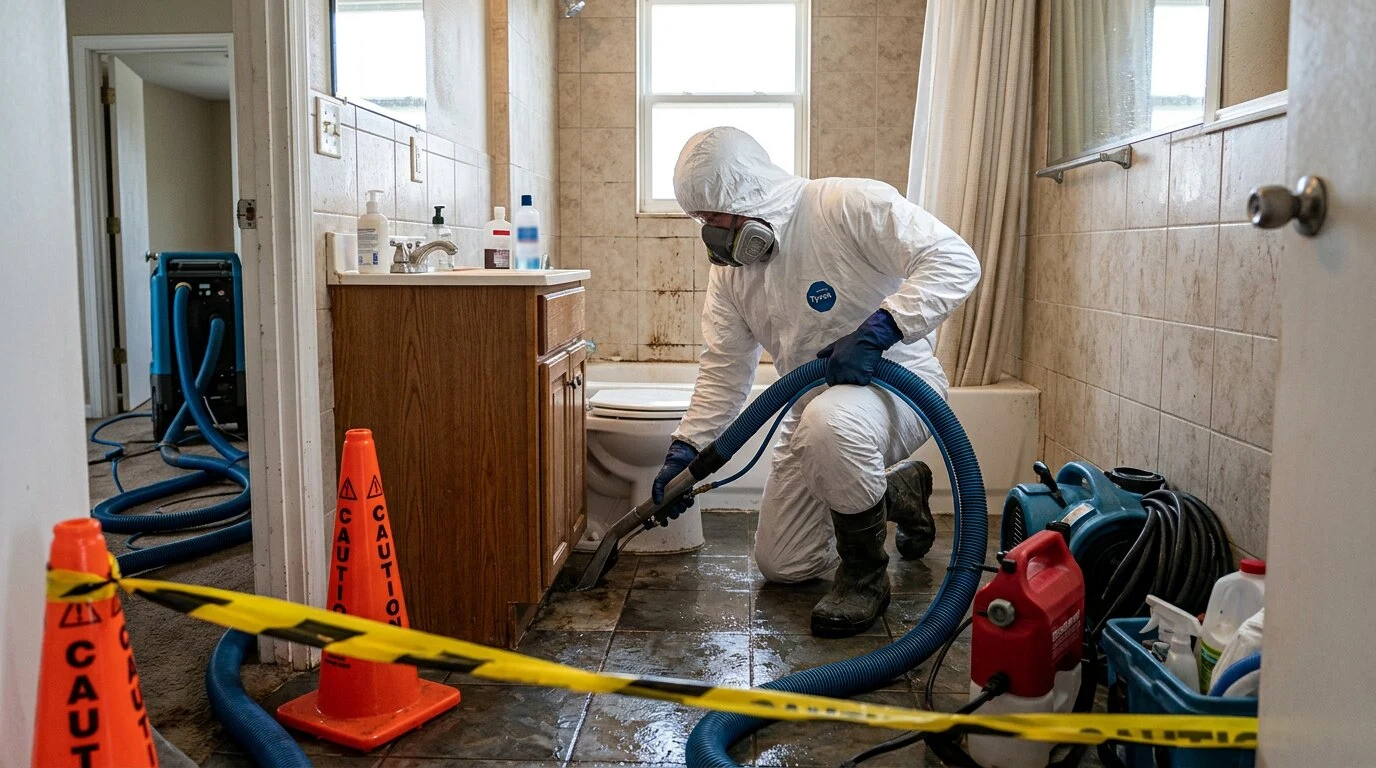
Restoration crew running gas-powered extraction pumps to remove standing water from a flooded Tampa building

When water is actively standing in a home or business, extraction speed is the single biggest factor in how much damage the structure ends up with. We run truck-mounted extraction units and submersible pumps for anything from a few inches of storm surge in a South Tampa living room to a fully flooded first floor, and we're set up for 24/7 dispatch because water damage doesn't wait for morning.

We extract from flooring, carpet and pad, and any standing water in crawl spaces, then move immediately into moisture mapping to find water that's already migrated into walls, cabinetry, and subfloor โ€” because what you can see standing on the floor is rarely the whole problem.

For active storm response, we prioritize calls by severity and can mobilize additional crews and equipment ahead of confirmed landfall when conditions allow, so extraction can begin the moment it's safe to get on-site.

๐Ÿ“ž Call 772-291-5749

Request This Service

* Indicates required field

Our Extraction Process, Step by Step

We start with truck-mounted extraction and submersible pumps to pull standing water fast, prioritizing rooms with the deepest water and the most vulnerable materials first. Once the floor is clear, we move to moisture mapping with penetrating meters to find water that's already migrated into walls, cabinet toe-kicks, and subfloor โ€” the damage you can't see just by looking at a wet floor.

Pre-Landfall Mobilization for Confirmed Storms

When a storm's track and surge forecast are confirmed ahead of landfall, we can pre-position additional crews and equipment in the Tampa Bay area so extraction starts the moment it's safe to get on-site, rather than waiting for a callback queue to work through after the storm passes. We prioritize calls by severity โ€” active flooding and occupied structures first.

Crawl Spaces, Slabs, and Storm Surge Depths

How we extract depends on what kind of water and what kind of structure. A few inches of storm surge in a South Tampa living room needs different equipment than a fully flooded first floor, and slab-on-grade homes โ€” the majority of Tampa housing stock โ€” need particular attention to how far water has wicked into the concrete and baseboards before we consider extraction complete.

Extraction Equipment We Actually Run

Our trucks carry truck-mounted extraction units that pull suction directly off the vehicle's own power, which gives us significantly more continuous vacuum than a portable machine can sustain over a multi-hour job. For water that's too deep, too far from the driveway, or sitting somewhere a hose can't easily reach โ€” a flooded garage, a detached structure, a low point in a yard pooling toward the foundation โ€” we switch to gas or electric submersible pumps that can run unattended while a crew works elsewhere in the structure. Carpet and pad get pulled with weighted extraction wands that press down as they draw water up, which recovers meaningfully more moisture than a wand that just skims the surface. We carry enough hose and pump capacity to stage multiple extraction points at once on a large loss, rather than moving one unit room to room while water keeps spreading.

Why We Determine Water Category Before Extraction Starts

Not all standing water gets treated the same way, and we make that call before extraction begins, not after. Clean water from a supply line or an appliance failure (Category 1) can generally be extracted and dried in place. Water that's picked up any contamination โ€” gray water from an appliance overflow or an AC condensate backup (Category 2), or sewage and floodwater with ground contamination (Category 3) โ€” changes what equipment we use, what PPE the crew wears, and which materials get dried versus removed. Getting this classification right on arrival avoids the mistake of drying materials that should have been discarded, which is both an insurance documentation problem and a real health consideration.

What Happens to Materials the Longer Water Sits

Extraction speed matters because materials absorb water on a clock, not instantly. Drywall begins wicking moisture upward from the baseline within hours, and the paper facing that mold spores favor can be measurably damp well above the visible waterline by the time we arrive on a delayed call. Hardwood flooring cups and can permanently warp after even a single day of standing water, while laminate and engineered flooring frequently can't be saved at all once water gets under the seams. Baseboards swell and pull away from the wall, particleboard cabinet bases delaminate, and carpet pad โ€” which holds far more water than the carpet on top of it โ€” becomes a reservoir that keeps re-wetting the carpet from underneath even after the visible surface looks dry.

Two Common Mistakes We See Before We Arrive

The two mistakes we run into most often both come from a reasonable instinct to do something while waiting for help. A shop vac can pull surface water, but it isn't built for continuous high-volume extraction and typically leaves enough residual moisture in flooring and pad that the underlying saturation problem doesn't actually improve much. The other is delaying the call to check with an insurance adjuster first โ€” most policies expect the homeowner to take reasonable steps to prevent further damage, and a delayed extraction that lets water spread further or mold start colonizing can work against a claim rather than protect it. If you're not sure whether a loss is covered, call us and your insurance company at the same time rather than choosing one before the other.

Water Extraction & Emergency Pump-Out FAQs

How much standing water can your equipment handle at once?

Our truck-mounted extraction units and submersible pumps are built for volume โ€” from a few inches of storm surge in a single room to a fully flooded first floor. For large-scale flooding we can bring in multiple crews and additional pumps rather than working one unit through a job that needs more capacity.

Do you charge extra for emergency, after-hours extraction?

We're set up for 24/7 dispatch because standing water doesn't wait for business hours, and our pricing reflects that reality rather than penalizing you for calling at 2am. Ask for specifics when you call โ€” every job is scoped individually based on the amount of water and the affected area.

What's the difference between extraction and drying?

Extraction is removing water that's actively standing or pooled โ€” the fast, first step. Drying is the longer process that follows, using air movers and dehumidifiers to bring the structure itself (drywall, subfloor, framing) down to a verified dry standard, since a lot of water soaks into materials well after the visible standing water is gone.

Areas We Serve

Proudly providing water damage restoration across the region:

Get Water Extraction & Emergency Pump-Out in Tampa Today

Fast response, upfront pricing, and friendly local pros. Call now for a free quote.

๐Ÿ“ž Call 772-291-5749