๐Ÿ“ž Call for a Free Quote: 772-291-5749

Structural Drying & Dehumidification in Tampa, FL

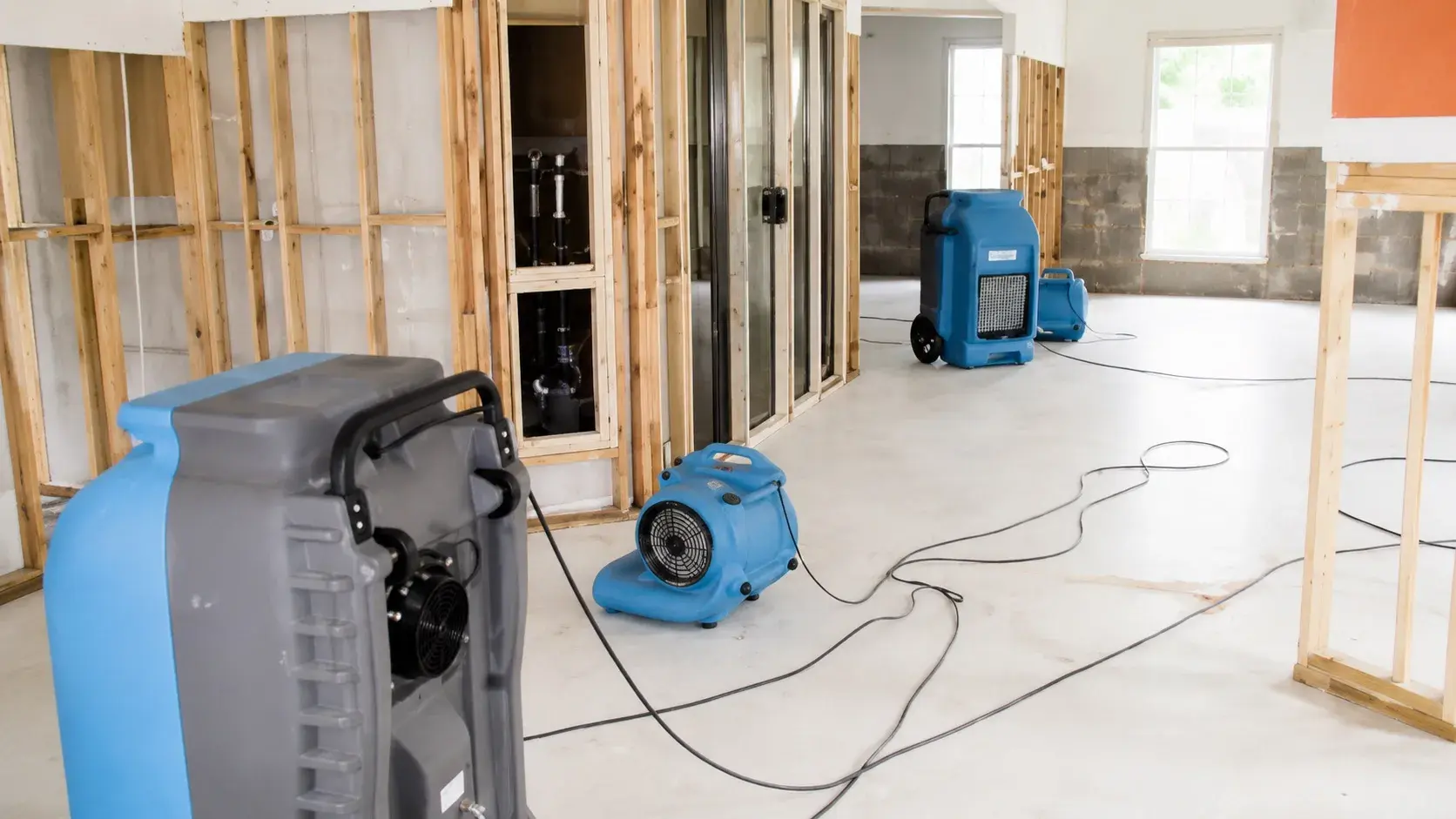
Industrial air movers and dehumidifiers drying out a gutted structure down to the studs

Getting a structure to a verified dry standard is what actually prevents mold โ€” not just pulling out standing water. Once extraction is complete, we position industrial air movers and commercial dehumidifiers based on the specific materials affected (drywall, subfloor, framing, cabinetry) and Tampa's already-humid ambient conditions, which make natural drying alone unreliable almost year-round.

We take moisture readings throughout the drying process with penetrating and non-penetrating meters, logging progress against dry-standard targets for each material type, following IICRC S500 protocol. That log becomes part of your documentation โ€” useful for insurance claims and for your own peace of mind that the job is actually finished, not just quiet.

Given how fast mold can take hold in our climate, we typically monitor drying daily until every affected material reaches target moisture content, adjusting equipment placement as readings change.

๐Ÿ“ž Call 772-291-5749

Request This Service

* Indicates required field

Why Tampa's Humidity Makes Natural Drying Unreliable

Tampa's ambient humidity sits high enough, most of the year, that a wet structure left to air-dry on its own often never actually reaches a safe moisture content โ€” it just plateaus somewhere still damp enough to support mold growth. That's why we position industrial air movers and commercial dehumidifiers based on the specific materials affected rather than relying on open windows and fans.

How We Log Progress Against IICRC S500 Targets

We take readings with both penetrating and non-penetrating moisture meters throughout the drying process, logging each affected material against its IICRC S500 dry-standard target โ€” drywall, framing, subfloor, and cabinetry all have different targets and dry at different rates. That log becomes part of your documentation, showing exactly when the structure was verified dry, not just declared dry.

Daily Monitoring Until Materials Actually Hit Target

Given how fast mold can take hold in Florida's climate, we typically check and adjust equipment placement daily rather than setting machines and returning at the end of a job. If a material is drying slower than expected โ€” often a sign water traveled farther than the initial mapping showed โ€” we reposition equipment or extend drying time rather than closing the job on a fixed schedule.

The Drying Equipment We Actually Position

We work with low-grain refrigerant (LGR) dehumidifiers as our default on most jobs because they pull moisture out of the air more efficiently than a standard refrigerant unit, especially in Tampa's already-humid ambient conditions where a lesser machine struggles to make headway. Axial air movers get positioned to create a continuous air pattern across wet surfaces, not just pointed randomly at a wall, since evaporation depends on moving air across the wet material as much as it depends on the dehumidifier removing the resulting moisture from the room. For hardwood floors and other assemblies where water has traveled beneath the surface, we add specialty drying mats or injection systems that force airflow directly under the material rather than relying on ambient air movement to reach it. Equipment count and placement both change as the job progresses โ€” a room that starts with several air movers usually needs fewer as materials approach dry standard.

Why Temperature, Humidity, and Airflow Have to Be Balanced Together

Drying isn't just about running more machines โ€” the science behind it, psychrometry, is about managing the relationship between temperature, relative humidity, and airflow so that materials give up moisture as efficiently as possible. Raise the temperature too much without adequate dehumidification and air movement, and you can actually accelerate mold growth instead of preventing it, since warm, humid, stagnant air is exactly the environment mold favors. Run dehumidifiers without enough air movement, and wet materials dry unevenly, since it's airflow across a surface that pulls moisture out of the material in the first place. We monitor the psychrometric conditions in each room throughout the job โ€” not just the material moisture readings โ€” and adjust equipment mix accordingly rather than setting machines once and leaving them running unchanged for days.

What a Dry-Standard Certificate Actually Documents

When we close out a drying job, we can provide a certificate of completion showing each affected material, its moisture reading at closeout, and the IICRC S500 dry-standard target it was measured against โ€” not just a statement that the job is finished. That documentation matters for two practical reasons: it gives you something concrete to hand your insurance company or a future buyer if the property sells, and it protects you if a mold issue surfaces months later from an unrelated cause, since you have dated proof the structure was verified dry when we left. We keep a copy of every job's moisture log, so if a question comes up later, we're not relying on memory to reconstruct what was actually done.

Why 'It Feels Dry' Isn't the Same as Verified Dry

Relative humidity in a room can feel completely normal to a person standing in it while the drywall six inches behind the baseboard is still well above its dry-standard target โ€” human perception just isn't a reliable moisture instrument. We've closed out jobs where a homeowner was ready to call it done days before the meter agreed, and we've also found materials that read wet well after the room's ambient humidity had returned to normal, because trapped moisture inside a wall cavity doesn't necessarily change how the air in the room feels. That gap between perception and measurement is exactly why we don't rely on a visual or a comfort check to declare a material dry โ€” every closeout is backed by an actual meter reading against a documented target.

Structural Drying & Dehumidification FAQs

How long does structural drying typically take in Tampa's humidity?

It depends heavily on what got wet and how saturated it is, but Tampa's high ambient humidity generally means longer dry times than the same job would take in a drier climate, since the air itself can't absorb moisture as efficiently. Most jobs run several days to a couple of weeks; we monitor daily and extend equipment time rather than guessing at a fixed schedule.

How do you know when a wall or subfloor is actually dry?

We take readings with penetrating and non-penetrating moisture meters and compare them against IICRC S500 dry-standard targets specific to that material โ€” drywall, framing, and subfloor all have different targets. A material is documented as dry when it hits that number, not when it visually looks dry or the air in the room feels normal.

Do I need to leave the house during drying?

Usually not for a typical residential job โ€” air movers and dehumidifiers are loud but most homeowners stay through the drying phase. Larger commercial jobs or extensive Category 3 contamination may call for limiting access to affected areas, which we'll flag upfront if it applies to your situation.

Areas We Serve

Proudly providing water damage restoration across the region:

Get Structural Drying & Dehumidification in Tampa Today

Fast response, upfront pricing, and friendly local pros. Call now for a free quote.

๐Ÿ“ž Call 772-291-5749