
๐Ÿ“ž Call for a Free Quote: 772-291-5749

Commercial & Multifamily Water Damage in Tampa, FL

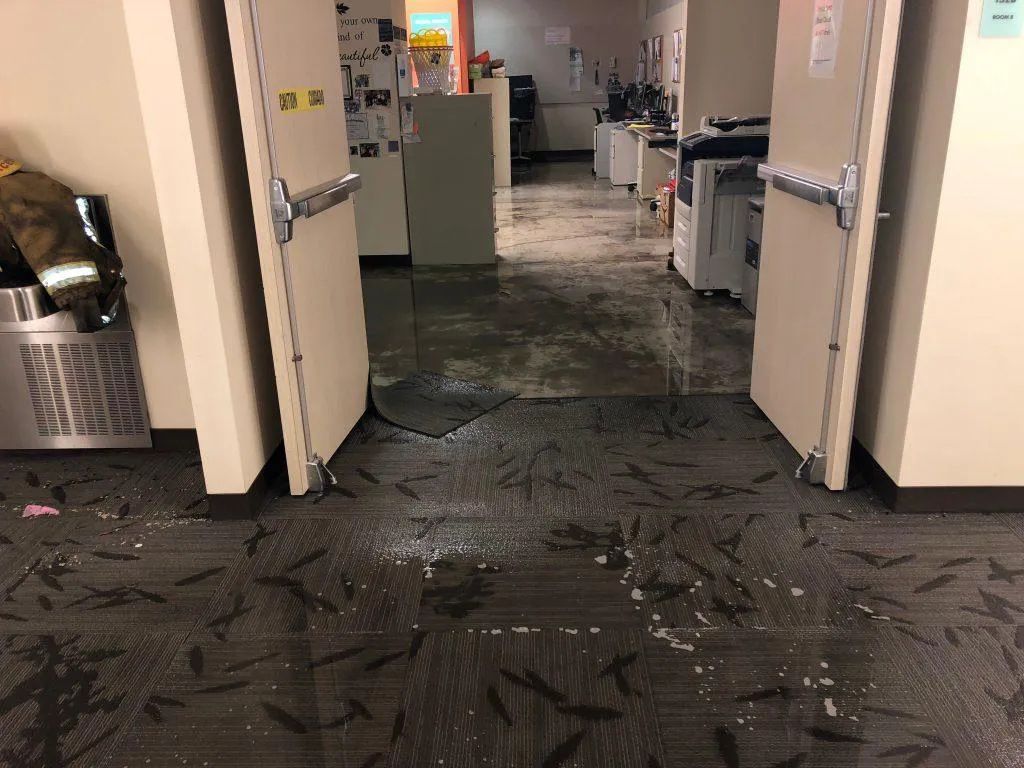
Flooded commercial office corridor with saturated carpet tiles after a water damage event

Water damage in a commercial building or multifamily property rarely stays contained to one space for long โ€” a burst supply line on an upper floor or a storm-damaged roof over shared common areas can affect multiple units or tenants before anyone catches it. We work with property managers, HOA boards, and business owners to respond quickly, scope the full extent of the damage across affected units, and schedule drying equipment and repairs with minimal disruption to occupied spaces.

After-hours and weekend response is available for active leaks in occupied buildings, and we provide the documentation property managers and HOA boards typically need for insurance and liability purposes.

From a single office suite to a full common-area flood after a Tampa Bay storm surge event, we scale crew size and equipment to the property.

๐Ÿ“ž Call 772-291-5749

Request This Service

* Indicates required field

Why Damage Rarely Stays Contained to One Unit

A burst supply line on an upper floor or a storm-damaged roof over shared common areas can affect multiple units or tenants before anyone catches it, since water travels between units through shared walls, plumbing chases, and stairwells. We scope adjacent units and the floor below before assuming damage stopped where it was first reported.

Working With Property Managers and HOA Boards

We coordinate directly with property managers, HOA boards, and business owners to schedule drying equipment and repairs with minimal disruption to occupied spaces, and after-hours and weekend response is available for active leaks in occupied buildings โ€” a burst pipe on a Saturday night in a multifamily building doesn't wait for Monday.

Scaling From a Single Suite to a Full Common-Area Flood

We provide the documentation property managers and HOA boards typically need for insurance and liability purposes โ€” unit-by-unit photos, moisture logs, and a clear scope breakdown. From a single office suite to a full common-area flood after a Tampa Bay storm surge event, we scale crew size and equipment to match the property.

Keeping a Building Operating During the Repair

For an occupied office building, retail space, or apartment complex, the goal isn't just drying the structure โ€” it's minimizing how much of the building has to go offline while we do it. We phase drying equipment room by room or floor by floor where possible, so tenants in unaffected areas aren't dealing with the noise and disruption the entire time, and we schedule noisier or more disruptive work for off-hours in a retail or office setting when the building's operating schedule allows for it. For an apartment building, that often means coordinating directly with individual unit residents on access windows rather than assuming everyone's available during standard business hours.

Water Sources That Show Up More in Commercial Buildings

Some water damage sources are specific to commercial and multifamily construction and rarely come up in a single-family home call: fire sprinkler system leaks or accidental discharges, rooftop HVAC and package-unit condensate or refrigerant leaks that travel down through multiple floors, elevator pit flooding, and shared plumbing stacks that can send one unit's problem into the unit below it. We treat each of these as its own investigation, since the visible damage location and the actual source are often on different floors entirely in a multi-story building.

HOA Master Policies vs. Individual Unit Owner Coverage

Condo and HOA water damage claims often involve two separate insurance policies at once โ€” the association's master policy, which typically covers the building structure and common areas, and the individual unit owner's policy, which typically covers interior finishes, personal property, and sometimes betterments the owner made to the unit. Figuring out which policy covers which part of a loss is a common point of confusion and occasional dispute, especially when water travels from a common-area source into an individual unit. We document damage by location and likely source clearly enough that whoever's sorting out the two policies has a clear factual record to work from, even though determining coverage itself isn't something we do.

Scaling Crew and Equipment for a Large-Loss Event

A one-unit leak and a common-area flood affecting an entire building's ground floor need very different resource levels, and we scale accordingly rather than sending the same crew size to every commercial call. Large-loss jobs can mean multiple extraction crews working simultaneously, dozens of air movers and several commercial dehumidifiers running at once, and a dedicated project point of contact coordinating with the property manager, insurance adjusters, and other trades on-site rather than one technician trying to track all of that alone. We size the response to the loss on day one rather than starting small and scaling up as we discover the true scope.

Permits and Code Considerations on Larger Commercial Jobs

A commercial or multifamily water loss that requires structural repairs โ€” replacing drywall across common areas, addressing damaged framing, or extensive demolition โ€” can trigger permit requirements that a smaller residential job typically wouldn't. We flag when a job's scope likely needs permitted work early on, since a property manager or building owner needs that in the repair timeline from the start rather than discovering it partway through. We don't pull permits ourselves for work outside our licensed trade, but we coordinate with the contractors who do so the drying and mitigation timeline doesn't get out ahead of what's actually permitted.

Liability Documentation for Property Managers and Boards

Beyond insurance, property managers and HOA boards often need water-damage documentation for a different reason: liability exposure if a resident's belongings were damaged by a building-source leak, or if a slow response is later characterized as negligent maintenance. We provide dated, detailed records of when we were called, what we found, and how quickly we responded, which gives a property manager or board something concrete to reference if a resident dispute or liability question comes up later, independent of the insurance claim itself.

After-Hours Response for Occupied Buildings

An active leak in an occupied apartment building or a business that's open the next morning doesn't wait for a convenient time, which is why after-hours and weekend response is a standard part of how we handle commercial and multifamily calls, not an emergency surcharge tacked onto normal service. A burst pipe on a Saturday night above an occupied unit gets the same priority as a weekday call, since the water doesn't know what day it is and neither does the damage it causes the longer it runs.

Areas We Serve

Proudly providing water damage restoration across the region:

Get Commercial & Multifamily Water Damage in Tampa Today

Fast response, upfront pricing, and friendly local pros. Call now for a free quote.

๐Ÿ“ž Call 772-291-5749